

Table of Contents
- What Are Microplastics?
- Why This Matters More Today Than Ever
- How Microplastics May Affect the Body
- What the Research Is Showing
- Why This Became Personal for Me
- Why Luxe Beauty Chose Glass (Even When It’s Harder)
- A Note on “Greenwashing”: Not All Alternatives Are Better
- How to Reduce Microplastic Exposure (Simple Daily Steps)
- Progress Over Perfection
- Supporting Peer-Reviewed Scientific References
- FAQs
Microplastics Found in Cancer Tumors: What Researchers Are Now Discovering
In recent years, microplastics have quietly become one of the most concerning environmental exposures of our time.
Now, emerging research is raising even deeper questions.
A 2025 study published in Environmental Pollution found that microplastics were present at significantly higher concentrations in prostate cancer tumors compared to nearby noncancerous tissue.
Another study examining breast cancer patients found that microplastics accumulated in tumor tissue and may influence cellular processes like mitophagy—a mechanism linked to how cells regulate damage and survival.
While research is still evolving, one thing is clear:
Microplastics are not just in our environment anymore. They are in the human body.
What Are Microplastics?
Microplastics are tiny plastic particles—often smaller than 5mm—that come from:
Breakdown of larger plastic products
Synthetic fabrics
Food packaging
Personal care products
Bottled water
Airborne environmental exposure
They are now found in:
Drinking water
Food (including seafood, salt, and produce)
Air we breathe
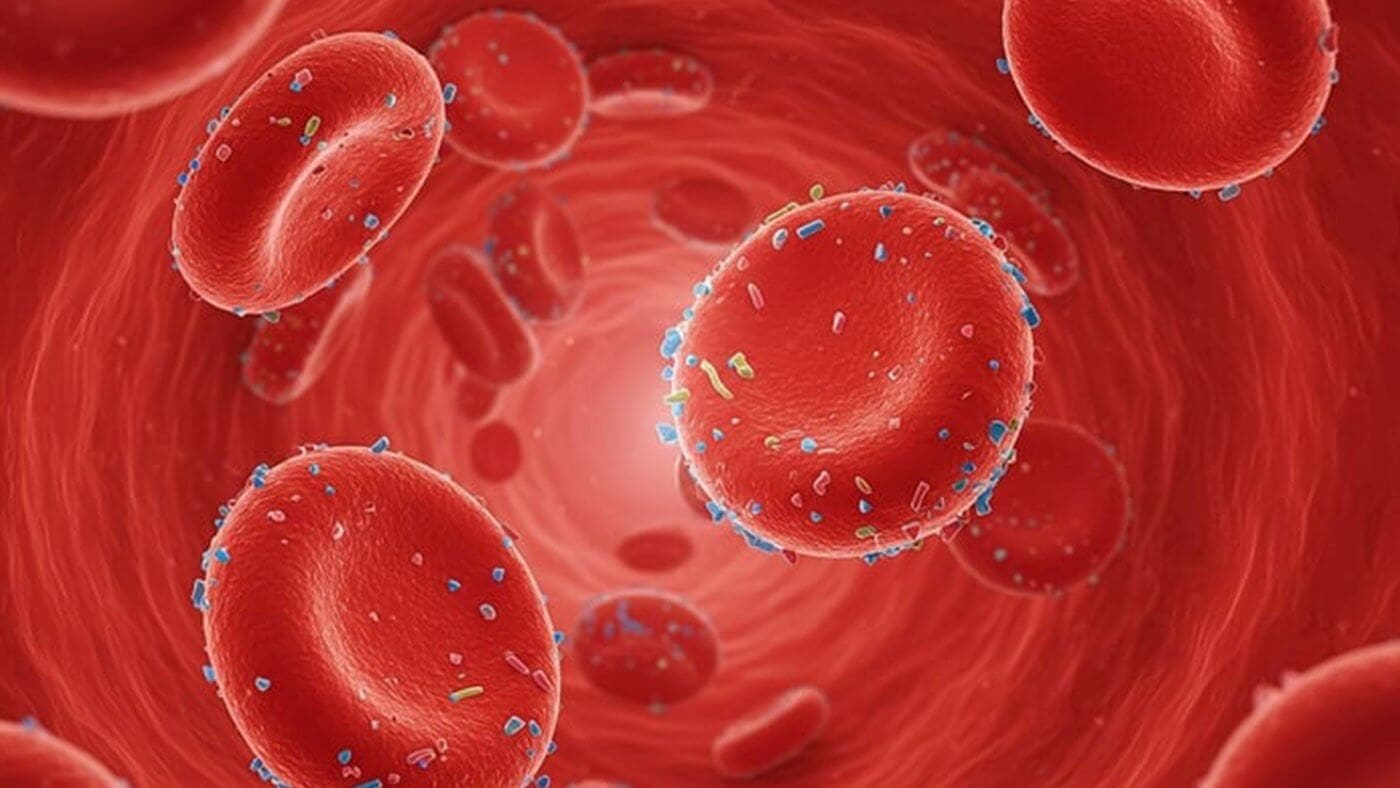
Human blood, lungs… and now, tumor tissue
This isn’t about fear—it’s about awareness.
Why This Matters More Today Than Ever
Microplastic exposure isn’t new—but the level of exposure today is and microplastics in the human body is increasing.
Plastic production has increased dramatically over the past few decades, and as these materials break down, they create microscopic particles that persist in the environment and the human body.
At the same time, modern lifestyles have increased our daily exposure through:
Packaged foods
Bottled beverages
Synthetic materials
Indoor air environments
This combination of higher exposure + continuous accumulation is why researchers are now beginning to detect microplastics in human tissue.
While science is still uncovering the long-term implications, this shift highlights the importance of reducing unnecessary exposure wherever possible.
How Microplastics May Affect the Body
They aren’t just inert particles.
They often carry or release endocrine-disrupting chemicals (EDCs) such as:
Bisphenol-A (BPA) — commonly found in plastics labeled PC #7
Phthalates — found in flexible plastics like PVC (#3) and fragrances
These compounds can:
Mimic hormones
Disrupt the endocrine system
Interfere with reproductive health
Impact metabolic function
As research suggests, even low-dose, long-term exposure may have biological effects—especially during sensitive life stages like pregnancy and childhood.
What the Research Is Showing
The presence of microplastics in the human body is no longer theoretical—it is now being documented across multiple biological systems.
A growing body of research has detected microplastics in:
Human blood
Lung tissue
Placenta
Breast tissue
And more recently, cancerous tumors
A 2025 study published in Environmental Pollution reported that microplastics were found at significantly higher concentrations in prostate cancer tissue compared to adjacent noncancerous tissue. While this does not prove causation, it raises important questions about accumulation and biological interaction.
In breast cancer research, microplastics have also been shown to interact with cellular pathways. One study identified that microplastics may influence mitophagy (the process by which cells remove damaged mitochondria) through mechanisms involving:
ANXA2-mediated endocytosis
IL-17 signaling pathways
These pathways are associated with inflammation and immune response, which are both areas of interest in cancer biology.
Additional studies have explored how microplastics may contribute to oxidative stress, a key driver of cellular aging and tissue damage. Oxidative stress occurs when there is an imbalance between free radicals and the body’s ability to neutralize them with antioxidants. Oxidative stress plays a major role in skin aging and cellular damage (learn more about how blue light contributes to this here.
This is particularly relevant because many plastics are not inert—they can:
Carry environmental toxins
Adsorb heavy metals
Release endocrine-disrupting chemicals like BPA and phthalates
Some laboratory studies suggest that microplastics may:
Trigger inflammatory responses
Disrupt cellular signaling
Interfere with hormone regulation
It is important to emphasize that research is still evolving. However, the consistency of findings across multiple systems suggests that microplastic exposure is a growing area of concern in human health.
Why This Became Personal for Me
When I helped my Mom heal from stage four cancer, everything changed.
I started looking deeper—not just at skincare, but at everything we’re exposed to daily.
Plastic was everywhere.
And once you see it… you can’t unsee it.
So I made a decision:
To reduce exposure wherever possible.
To prioritize clean, organic ingredients.
To choose materials that align with health—not convenience.
Why Luxe Beauty Chose Glass (Even When It’s Harder)
From the very beginning of Luxe Beauty, I made the complex and expensive decision to package our formulas in custom glass bottles.
Glass cost a lot more to ship and product production is much more difficult and time consuming that using plastic bottles!
But because it aligned with our values and I want the best for my customers and myself.
Many Reasons to Love Glass
Made from natural raw materials
100% recyclable with no loss in purity
Does not leach endocrine-disrupting chemicals
Preserves ingredient integrity
Would a full glass pump system be ideal?
Yes.
But the reality is:
Glass pumps are significantly more expensive
They increase product cost dramatically
And many customers aren’t ready for that price shift
So we balance function + integrity.
Pumps help:
Reduce contamination from hands
Limit oxygen exposure
Preserve formula stability
Every decision is intentional.
A Note on “Greenwashing”: Not All Alternatives Are Better
As awareness grows, so do marketing claims.
One trend I’m seeing is a shift toward aluminum packaging.
But here’s the truth:
Aluminum is a known neurotoxin
It has been studied in relation to neurological health and breast tissue accumulation
It serves no biological function in the human body
This is where greenwashing comes in—when brands market something as “eco-friendly” or “safe” without full transparency.
At Luxe Beauty, we believe:
Informed choices > trendy swaps
How to Reduce Microplastic Exposure (Simple Daily Steps)
It’s impossible to avoid all plastic.
But small, intentional changes can significantly reduce your exposure over time.
1. Switch to Glass Food Storage
Store leftovers in glass containers instead of plastic.
Bonus: You can actually see your food.
2. Carry a Glass Water Bottle
Avoid bottled water when possible.
I personally don’t leave the house without my glass-bottled spring water.
3. Avoid Heating Food in Plastic
Heat accelerates chemical leaching.
Never microwave food in plastic containers.
4. Ditch Plastic Wrap
Instead of saran wrap:
Use glass containers with lids
Or beeswax wraps
Convenience is never worth compromising your health.
5. Choose Clean Dental Floss
Most floss is petroleum-based.
Look for options coated in:
Beeswax
Plant waxes
6. Skip Plastic-Lined Coffee Cups
Many takeaway cups are lined with plastic.
Bring your own:
Glass
Stainless steel
7. Avoid Receipts
Thermal paper receipts often contain BPA.
Say no—or wash your hands after handling.
8. Filter Your Water
High-quality water filters can help reduce microplastic exposure.
9. Be Mindful of Synthetic Fabrics
Polyester and nylon shed microplastics.
Opt for natural fibers when possible.
10. Choose Skincare Packaged In Glass
What you put on your body matters too.
Packaging can influence exposure.
Progress Over Perfection
If this feels overwhelming—that’s okay.
You don’t have to change everything overnight.
Start small.
Swap one thing.
Then another.
Because over time, those small decisions become a lifestyle.
Final Thought: Health Over Convenience
We live in a world flooded with plastic.
Avoiding it completely isn’t realistic.
But choosing better—when we can—is powerful.
At Luxe Beauty, every decision comes back to one question:
Does this support the body… or work against it?
Because true beauty isn’t just what you see on the surface.
It’s what you protect beneath it.
Supporting Peer-Reviewed Scientific References
Tian Z, Ding B, Guo Y, Zhou J, Jiang S, Lu J, Li N, Zhou X, Zhang W.
Microplastics accumulated in breast cancer patients lead to mitophagy via ANXA2-mediated endocytosis and IL-17 signaling pathway.
Environmental Pollution. 2025;364(Pt 2):125321.
Leslie HA, van Velzen MJM, Brandsma SH, Vethaak AD, Garcia-Vallejo JJ, Lamoree MH.
Discovery and quantification of plastic particle pollution in human blood.
Environment International. 2022;163:107199.
Ragusa A, Svelato A, Santacroce C, Catalano P, Notarstefano V, Carnevali O, Papa F, Rongioletti MCA, Baiocco F, Draghi S, D'Amore E, Rinaldo D, Matta M, Giorgini E.
Plasticenta: First evidence of microplastics in human placenta.
Environment International. 2021;146:106274.
Amato-Lourenço LF, dos Santos Galvão L, de Weger LA, Hiemstra PS, Vijver MG, Mauad T.
Presence of airborne microplastics in human lung tissue.
Science of the Total Environment. 2021;778:146370.
Microplastics detected in prostate cancer tissue at higher concentrations than noncancerous tissue.
Environmental Pollution. 2025;364(Pt 2):125321.
FAQs
What are microplastics?
Microplastics are tiny plastic particles smaller than 5 millimeters. They form when larger plastic items break down or are manufactured at a microscopic size for use in products. These particles are now found in water, food, air, and even the human body.
Have microplastics been found in the human body?
Yes. Scientific studies have detected microplastics in human blood, lungs, placenta, and more recently, in cancerous tissues. This suggests that exposure is widespread and that these particles can accumulate in the body over time.
Are microplastics harmful to human health?
Research is still evolving, but microplastics may carry or release endocrine-disrupting chemicals like BPA and phthalates. These compounds can interfere with hormones, inflammation pathways, and cellular function, especially with long-term exposure.
What does the research say about microplastics and cancer?
Recent studies have found higher concentrations of microplastics in cancerous tissues compared to noncancerous tissue. While this does not prove that microplastics cause cancer, it raises important questions about how they interact with the body and influence cellular processes.
How do microplastics enter the body?
Microplastics can enter the body through:
Drinking water (especially bottled water)
Food and food packaging
Airborne particles we breathe
Personal care products and synthetic materials
What are endocrine disruptors in plastics?
Endocrine disruptors are chemicals that can mimic or interfere with hormones in the body. Common examples found in plastics include BPA and phthalates, which may affect reproductive health, metabolism, and overall hormonal balance.
How can I reduce my exposure to microplastics?
You can reduce exposure by:
Using glass instead of plastic for food, water and skincare
Avoiding heating food in plastic containers
Filtering your drinking water
Choosing natural fibers over synthetic fabrics
Using clean, low-tox personal care products
Small changes over time can make a meaningful difference.
Is glass safer than plastic for storage and skincare?
Glass is considered a safer option because it does not leach chemicals or microplastics into its contents. It also preserves product integrity and is 100% recyclable without loss of quality. This is why luxe beauty prioritizes glass containers and glass bottles.
Are aluminum products a good alternative to plastic?
Aluminum is often marketed as an eco-friendly alternative, but it has its own concerns. It is a known neurotoxin and does not serve a biological function in the body. Choosing materials should always be based on informed decisions, not trends.