

Table of Contents
- What Is Astaxanthin?
- What Does Astaxanthin Do for You?
- Why Not All Astaxanthin Supplements Deliver the Same Benefits.
- Organic vs “Natural” Astaxanthin
- Why Water Quality Matters in Astaxanthin Farming
- Astaxanthin Bioavailability: Why Delivery Matters
- Liquid Astaxanthin vs Capsules
- Why Carrier Oil Matters (Sunflower Oil vs Olive Oil)
- How to Choose the Best Astaxanthin Supplement
- Final Thoughts
- FAQs
If you’re searching for the best astaxanthin supplement, you’re already past the hype.
You’re not asking what astaxanthin is anymore —
you’re asking which one actually delivers results.
And that’s where most people get stuck.
Astaxanthin is one of the most powerful antioxidants available, yet many supplements labeled “natural” or “high potency” fail to deliver the benefits people expect. Not because astaxanthin doesn’t work — but because quality, purity, sourcing, and bioavailability matter more than the label on the bottle.
This guide will show you how to choose the best astaxanthin:
What astaxanthin actually does for your body and skin
Why some supplements work and others don’t
How organic sourcing and water quality impact results
Why delivery format and carrier oil matter
And how to choose the best astaxanthin supplement with confidence
When it comes to your health, this is not the place to cheap out.
What Is Astaxanthin?
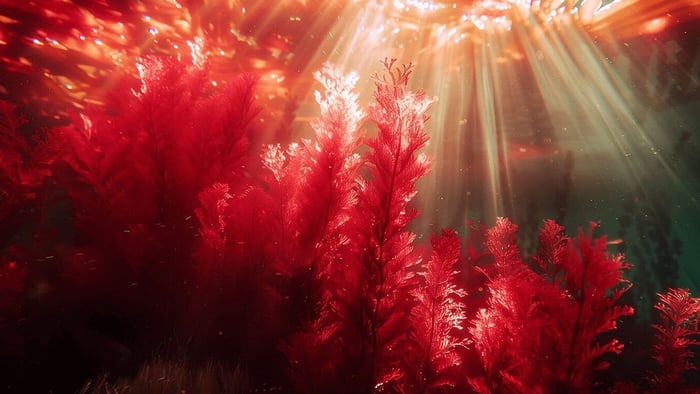
Astaxanthin is a naturally occurring carotenoid derived from microalgae. It’s responsible for the pink-red color in wild salmon, flamingos, and krill — but its real value lies in what it does inside the body.
Astaxanthin is often called the “King or Queen of Antioxidants” and is recognized as up to 6,000× more powerful than vitamin C as an antioxidant.
Antioxidants protect the body from oxidative stress — a process caused by free radicals that contributes to:
Premature aging
Wrinkles and loss of skin elasticity
Dull, uneven skin tone
Inflammation
Cellular damage
Astaxanthin doesn’t just mask symptoms. It supports the body’s natural defense systems, which is why it’s associated with skin glow, energy, recovery, and long-term vitality and why you want to choose the best astaxanthin supplement.
What Does Astaxanthin Do for You?
This is the question most people are really asking.
1. Supports Skin Glow, Smoothness, and Elasticity
Astaxanthin helps protect skin cells from oxidative stress caused by sunlight, pollution, and environmental exposure. When oxidative stress is reduced, skin appears:
Brighter
Smoother
More even
More resilient
This is why people describe astaxanthin as creating a natural glow — not shimmer, not makeup, not a filter.
2. Helps Defend Against Premature Skin Aging
Wrinkles don’t come from aging alone — they come from oxidation.
Astaxanthin helps protect collagen and cellular structures from oxidative damage, supporting:
Skin firmness
Elasticity
Long-term skin resilience
This is glow longevity, not quick fixes.
3. Supports Cellular and Mitochondrial Health
Astaxanthin works at the cellular level, including support for mitochondria — the energy centers of your cells.
This cellular support is why many people report:
Improved energy
Better recovery
Increased vitality
Healthy cells are the foundation of healthy skin and overall wellness.
4. Helps Calm Skin From the Inside Out
By supporting the body’s ability to manage oxidative stress, astaxanthin may help calm skin that looks stressed, reactive, or imbalanced — without irritation or harsh actives.
5. Supports Skin Exposed to Sunlight and Environmental Stress
Astaxanthin does not replace sunscreen, but it supports the skin’s internal antioxidant defense system, which is increasingly important in today’s environment. Astaxanthin’s antioxidant benefits can also be applied topically, which is why Luxe Beauty pairs internal supplementation with the Glow Power Antioxidant Serum with organic astaxanthin for a complete inside-out glow approach.
Why Not All Astaxanthin Supplements Deliver the Same Benefits.
Astaxanthin is derived from microalgae — and algae absorbs everything in its environment.
That means:
Water quality matters
Growing inputs matter
Farming standards matter
In non-organic cultivation systems, synthetic nutrients such as nitrates may be used to accelerate algae growth and increase yield. These inputs are not permitted in certified organic systems.
Because astaxanthin is such a powerful antioxidant, impurities can concentrate in the final ingredient.
This is why quality matters more than dosage why the best astaxanthin supplement must be a certified organic astaxanthin supplement.
Organic vs “Natural” Astaxanthin
One of the biggest misconceptions in supplements is believing that “natural” means clean.
It doesn’t.
“Natural” is not a regulated term. It does not guarantee:
Organic growing conditions
Clean water sources
Absence of synthetic inputs
Only certified organic astaxanthin meets strict third-party standards for purity, transparency, and ingredient integrity which is why it is the best astaxanthin.
Why Water Quality Matters in Astaxanthin Farming
Astaxanthin begins its life in water.
Modern oceans are increasingly exposed to:
Microplastics
Industrial pollutants
Heavy metals
For this reason, premium producers now favor controlled freshwater cultivation over open-ocean systems.
Luxe Beauty uses certified organic astaxanthin grown in clean, controlled freshwater systems using pure spring water, allowing for continuous monitoring and verified purity standards.
Purity begins at the source.
Astaxanthin Bioavailability: Why Delivery Matters
Astaxanthin is fat-soluble, meaning it must be consumed with fat to be absorbed properly.
Oil-based delivery:
Stimulates bile secretion
Forms mixed micelles
Improves absorption efficiency
Studies in animal models have shown improved astaxanthin absorption when delivered with monounsaturated fats, such as olive oil.
Liquid Astaxanthin vs Capsules
Many astaxanthin supplements come in capsules filled with cheap seed oils, most commonly sunflower oil.
Capsule formats may:
Limit absorption
Contain highly processed carrier oils
Require capsule breakdown before absorption
The best astaxanthin is a liquid astaxanthin supplement avoids these issues by allowing faster, more consistent absorption with fewer unnecessary ingredients.
Why Carrier Oil Matters (Sunflower Oil vs Olive Oil)
Sunflower oil is often used because it’s inexpensive — not because it’s optimal.
Concerns include:
Highly processed refinement
Use of chemical solvents such as hexane
High omega-6 fatty acid content
Organic MCT Oil, by contrast, is:
Naturally stable
Is quickly absorbed by the body
Supportive of cellular health
A superior lipid for antioxidant delivery
How to Choose the Best Astaxanthin Supplement
If you want real astaxanthin benefits, look for:
Certified organic sourcing
Clean freshwater cultivation
Oil-based liquid delivery
Carrier oil organic coconut MCT Oil
Third-party testing
Transparent standards
This is the difference between taking astaxanthin and experiencing its benefits.
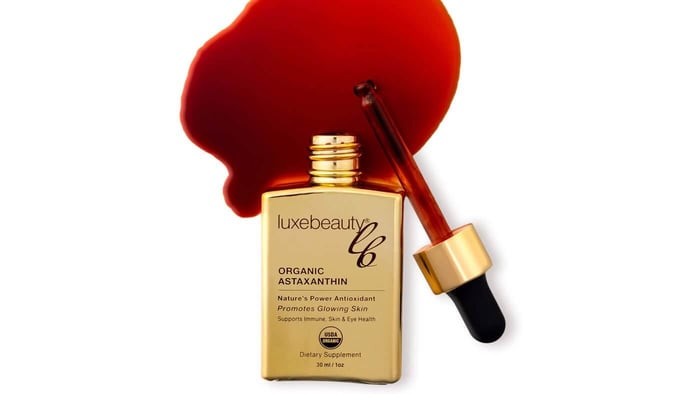
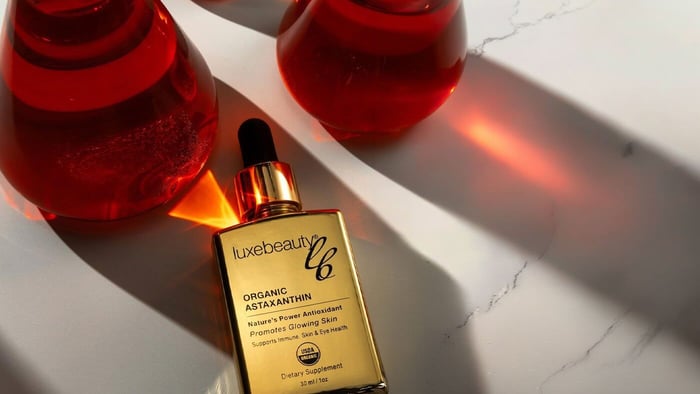
If you’re looking for the best astaxanthin supplement that meets these standards, Luxe Beauty’s certified organic astaxanthin supplement is designed to deliver purity, bioavailability, and long-term results without shortcuts.
Final Thoughts
Astaxanthin is one of the most powerful antioxidants available — but power without purity is a gamble.
When it comes to your skin, your energy, and your long-term health, quality matters.
Luxury isn’t about price.
It’s about standards.
Scientific References
1. Astaxanthin Antioxidant Potency
Guerin M, Huntley ME, Olaizola M.
“Haematococcus astaxanthin: applications for human health and nutrition.”
Trends in Biotechnology. 2003.
→ Documents astaxanthin’s exceptional antioxidant capacity compared to other antioxidants, including vitamin C.
2. Astaxanthin and Oxidative Stress Protection
Fassett RG, Coombes JS.
“Astaxanthin: a potential therapeutic antioxidant.”
Marine Drugs. 2011.
→ Reviews astaxanthin’s role in protecting cells from oxidative stress and inflammation.
3. Astaxanthin and Skin Health
Tominaga K, et al.
“Cosmetic benefits of astaxanthin on humans.”
Acta Biochimica Polonica. 2012.
→ Demonstrates improvements in skin elasticity, moisture, and appearance with astaxanthin supplementation.
4. Astaxanthin Bioavailability and Fat Absorption
Mercke Odeberg J, et al.
“Bioavailability of astaxanthin from different sources.”
European Journal of Clinical Nutrition. 2003.
→ Shows improved absorption when astaxanthin is delivered with dietary fats.
5. Algae Cultivation and Contaminant Absorption
Priyadarshani I, Rath B.
“Commercial and industrial applications of microalgae.”
Journal of Algal Biomass Utilization. 2012.
→ Discusses how microalgae absorb nutrients and environmental substances from their growing medium.
6. Seed Oils, Processing, and Oxidative Stability
Grootveld M, et al.
“Health effects of oxidized heated oils.”
Food Chemistry. 2020.
→ Explores oxidation concerns related to refined vegetable oils.
The information provided is for educational purposes only and is not intended to diagnose, treat, or cure any disease.
FAQs
What is the best astaxanthin supplement?
The best astaxanthin supplement is certified organic, grown in clean freshwater systems, delivered in an oil-based liquid for absorption, and made without cheap seed oils, synthetic additives, or unnecessary fillers.
Is certified organic astaxanthin better than “natural” astaxanthin?
Yes. “Natural” is not a regulated term and does not guarantee clean growing conditions. Certified organic astaxanthin is produced under strict standards that prohibit synthetic fertilizers, nitrates, pesticides, and chemical inputs, ensuring higher purity and integrity.
Why does Luxe Beauty only use certified organic astaxanthin?
Because astaxanthin is extremely potent, purity matters. Luxe Beauty uses certified organic astaxanthin grown in clean, controlled freshwater systems to ensure high standards for quality, bioavailability, and performance.
Why does water quality matter for astaxanthin?
Astaxanthin comes from microalgae, which absorbs everything in its environment. Clean, controlled freshwater cultivation helps reduce exposure to contaminants such as heavy metals and microplastics, supporting a purer final ingredient.
Why avoid sunflower oil in astaxanthin supplements?
Sunflower oil is commonly used because it is inexpensive, but it is often highly processed and refined using chemical solvents such as hexane. A high-quality oil such as Organic Coconut Oil is the shelve stable ( doesn't oxidize quickly) and better support antioxidant delivery.
Is liquid astaxanthin better than capsules?
Liquid astaxanthin is often more bioavailable than capsules because it does not rely on capsule breakdown. Oil-based liquid delivery supports faster and more consistent absorption with fewer unnecessary ingredients.
Can astaxanthin help with sun and environmental exposure?
Astaxanthin supports the skin’s internal antioxidant defense system, helping protect against oxidative stress caused by sunlight and environmental factors.
Is astaxanthin safe to take daily?
Astaxanthin is widely studied and considered safe when used as directed. Choosing a high-quality, certified organic source helps ensure purity and long-term safety.
Can astaxanthin be used both internally and topically?
Yes. Astaxanthin supports skin from the inside through supplementation and can also be applied topically to help protect skin directly. Using both supports a comprehensive inside-out glow approach.
What is astaxanthin and what does it do?
Astaxanthin is a powerful antioxidant derived from microalgae that helps protect cells from oxidative stress. It supports skin glow, elasticity, cellular health, energy, and long-term vitality by defending the body against free radical damage.
What are the benefits of astaxanthin for skin?
Astaxanthin helps support brighter, smoother, more even-looking skin. By reducing oxidative stress, it helps protect collagen, reduces winkles, supports skin elasticity, calms visible redness, and promotes a natural glow — not shimmer or makeup.
Is astaxanthin better than vitamin C?
Astaxanthin is recognized as up to 6,000× more powerful than vitamin C as an antioxidant. Unlike vitamin C, which works primarily in water-based environments, astaxanthin provides broader cellular protection without irritation.