

Table of Contents
- THE TRUTH ABOUT SKIN LIGHTENING SERUMS
- THE HIDDEN DANGERS IN POPULAR BRIGHTENING INGREDIENTS & IN SKIN LIGHTENING SERUMS:
- WHY LUXE BEAUTY’S LIGHTENING & BRIGHTENING SERUM IS DIFFERENT
- THE SCIENCE BEHIND OUR HERO INGREDIENTS
- HOW DOES LUXE BEAUTY'S LIGHTENING SERUM WORKS
- HOW TO USE THE LUXE BEAUTY SERUM
- SCIENTIFIC REFERENCES (Peer-Reviewed)
- FAQs
THE TRUTH ABOUT SKIN LIGHTENING SERUMS
A Non-Toxic, Luxury Approach to Brightening, Even Tone & Fading Dark Spots—Without Damaging Your Skin Barrier with skin lightening serums or lightening lotions.
Skin lightening serums are everywhere—but few are safe, barrier-friendly, or effective long term. Many serums cause quick “results” at the cost of irritation, inflammation, peeling, sun sensitivity, and long-term barrier damage.
Why?
Because most skin lightening serums use harsh chemicals, unstable vitamin C, synthetic bleaching agents, cheap seed oils, glycerin overload, or dimethicone, which can worsen pigmentation over time.
THE HIDDEN DANGERS IN POPULAR BRIGHTENING INGREDIENTS & IN SKIN LIGHTENING SERUMS:
✘ Hydroquinone
A melanocyte-damaging bleaching agent banned in the EU. Can cause rebound hyperpigmentation and long-term skin thinning.
Studies show long-term hydroquinone use may cause ochronosis (skin darkening).*
Banned in Europe and many countries.
✘ High-dose Kojic Acid / Arbutin
Effective but extremely irritating in high concentrations, especially for sensitive, hormonal, or reactive skin.
✘ Unstable Vitamin C (L-Ascorbic Acid)
Oxidizes within weeks → causes inflammation, redness, breakouts, and worsens dark spots.
Oxidizes rapidly
Increases free radicals
Triggers irritation in sensitive skin
✘ Glycerin Overload
Pulls water from deeper layers of the skin, creating dehydration and making dark spots appear darker.
✘ Seed Oils (Sunflower, Safflower, Soy, etc.)
Oxidize easily → oxidative damage → increased pigmentation.
✘ Dimethicone & Silicones
Create an artificial “smooth” effect while suffocating the skin and trapping debris.
Forms a plastic-like film
Can make hyperpigmentation appear worse over time
✘ Synthetic Fragrance
A leading cause of irritation, inflammation, and pigmentation flare-ups.
Your skin deserves a brightening serum rooted in science, purity, and barrier health, not shortcuts.
✘ High-Potency Acids (AHAs/BHAs)
Create micro-injury → worsens melasma and post-inflammatory hyperpigmentation.
Most brightening serums fail because they aggressively strip the skin rather than restore it.
WHY LUXE BEAUTY’S LIGHTENING & BRIGHTENING SERUM IS DIFFERENT
Luxe Beauty's lightening serum is formulated with a multifunctional blend of safe, effective, botanical brighteners that target pigmentation at every stage—without harming the barrier.
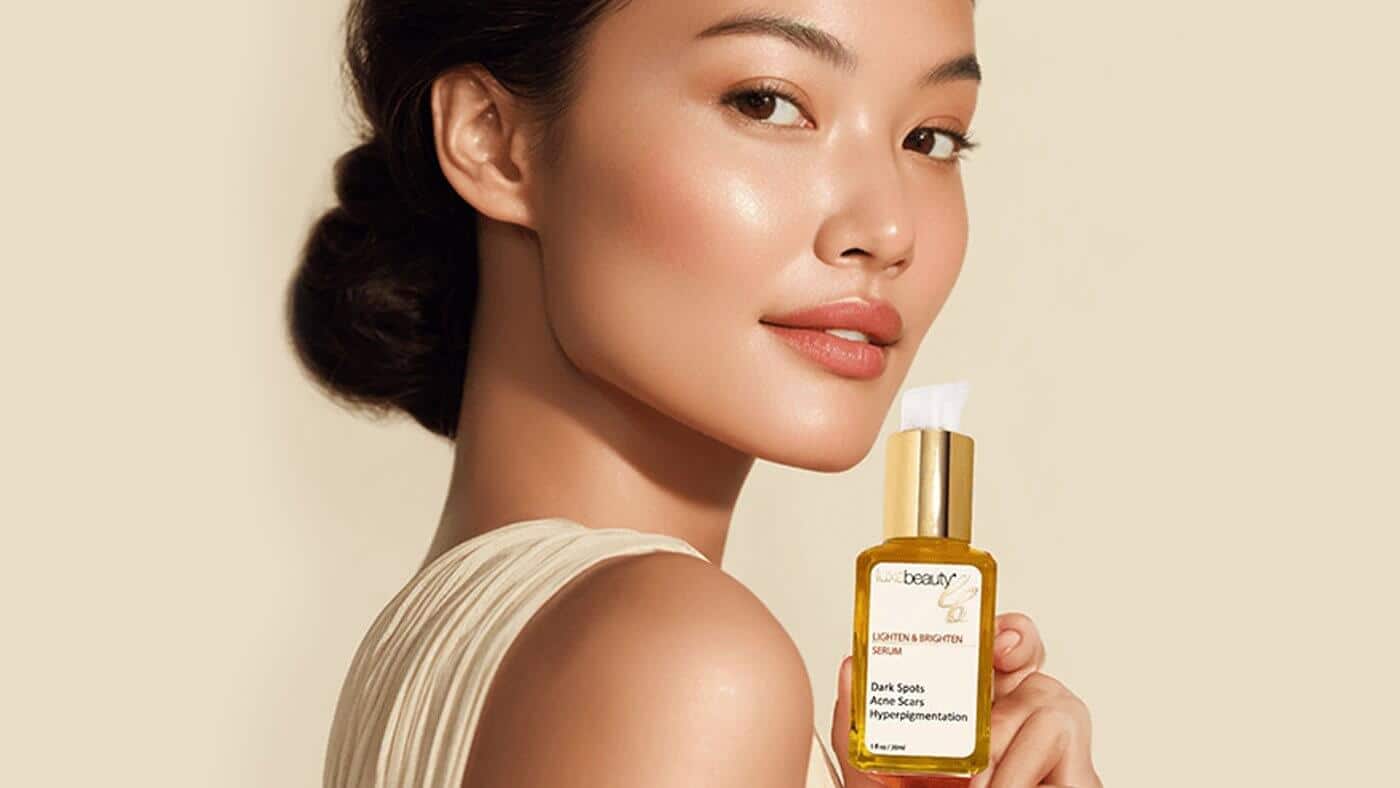
Luxe Beauty avoids ALL of these.
At Luxe Beauty, we took a different path:
A biochemist-formulated, antioxidant-rich, non-toxic brightening technology designed to fade dark spots, reduce hyperpigmentation, and improve uneven tone—without irritation and without ingredients banned in other countries.
THE HIDDEN DANGERS IN POPULAR BRIGHTENING INGREDIENTS
✔ Gentle but Potent
No hydroquinone.
No harsh acids.
No bleaching agents.
✔ Dermatologist-Tested
Non-irritating
Non-sensitizing
Non-comedogenic
✔ Clean, Non-Toxic, Biochemist-Formulated
Free from:
Seed oils
Dimethicone
Phenoxyethanol
Parabens
Fragrance
Alcohol
PEGs
Essential oils
Hydroquinone
Kojic acid (only low-dose, buffered form)
Mineral oil
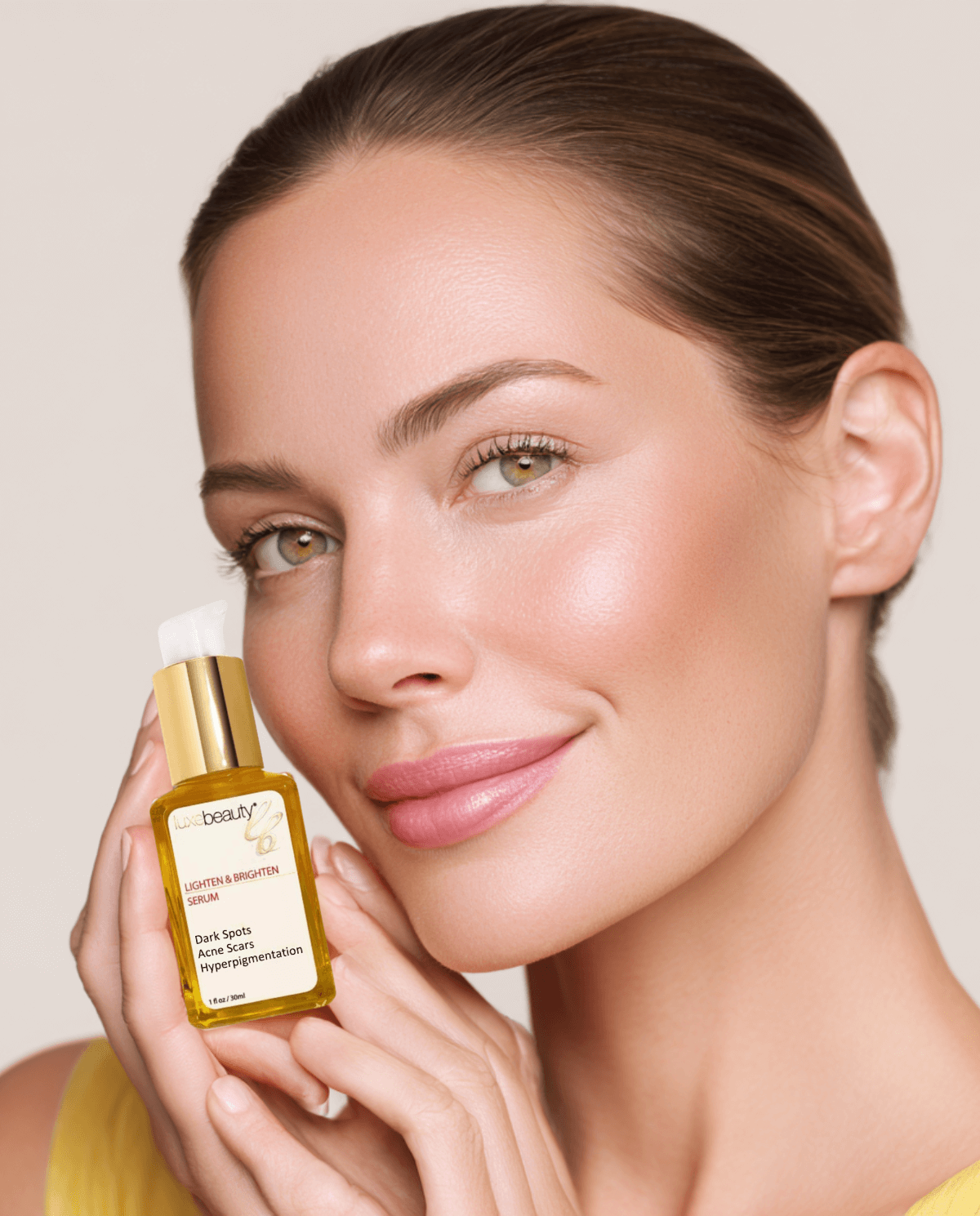
✔ Powered by High-Performance Botanicals + Proven Actives
Each ingredient is chosen for efficacy, safety, and synergy—not cheap fillers. The Luxe Beauty lightening serum using a precise % of Kojic Acid / Arbutin and supportive ingredients that face dark spots and brighten the skin.
✔ Designed to Restore, Not Strip
Your serum:
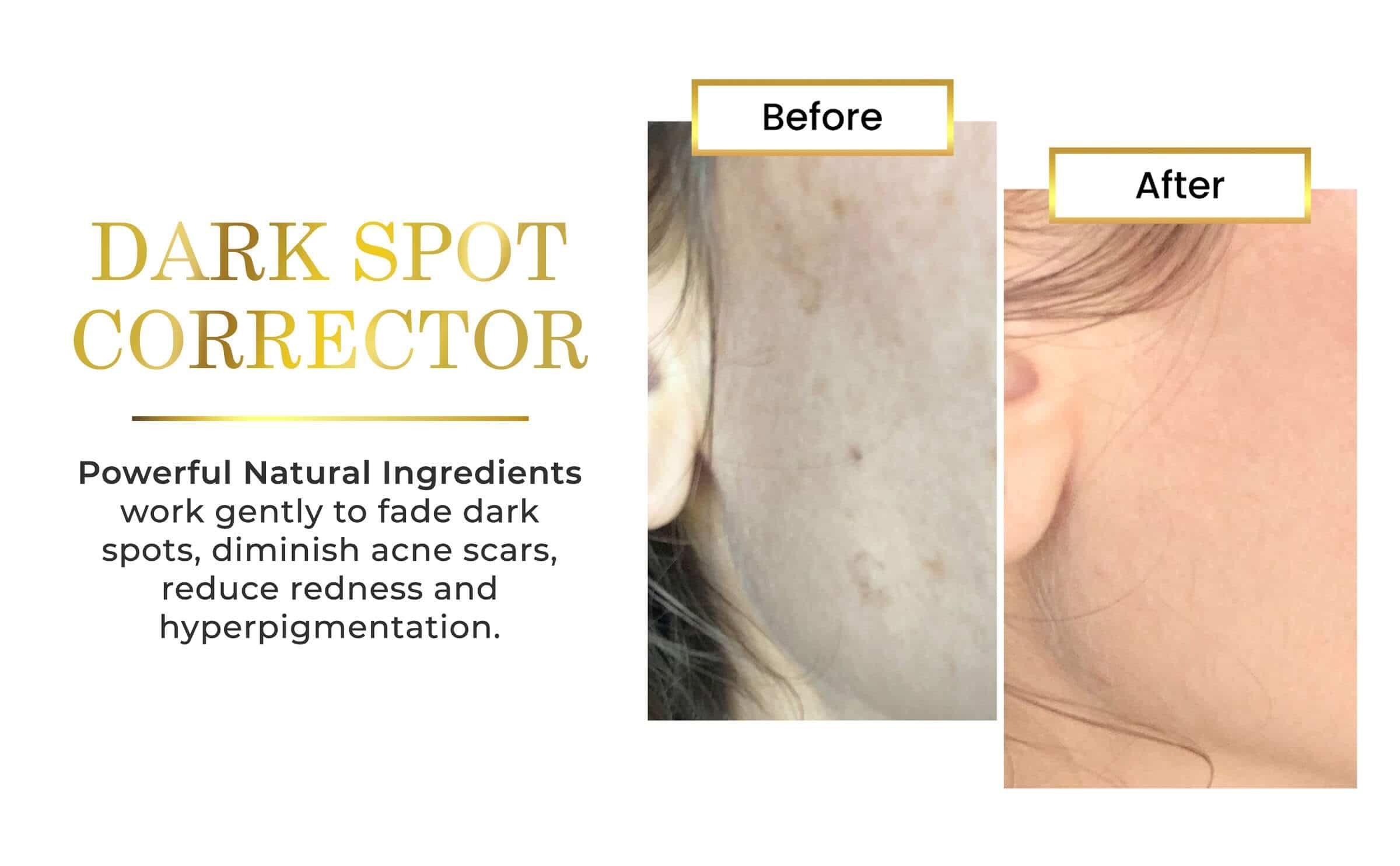
Fades dark spots
Brightens dull skin
Smooths texture
Reduces redness
Supports collagen
Strengthens the barrier
THE SCIENCE BEHIND OUR HERO INGREDIENTS
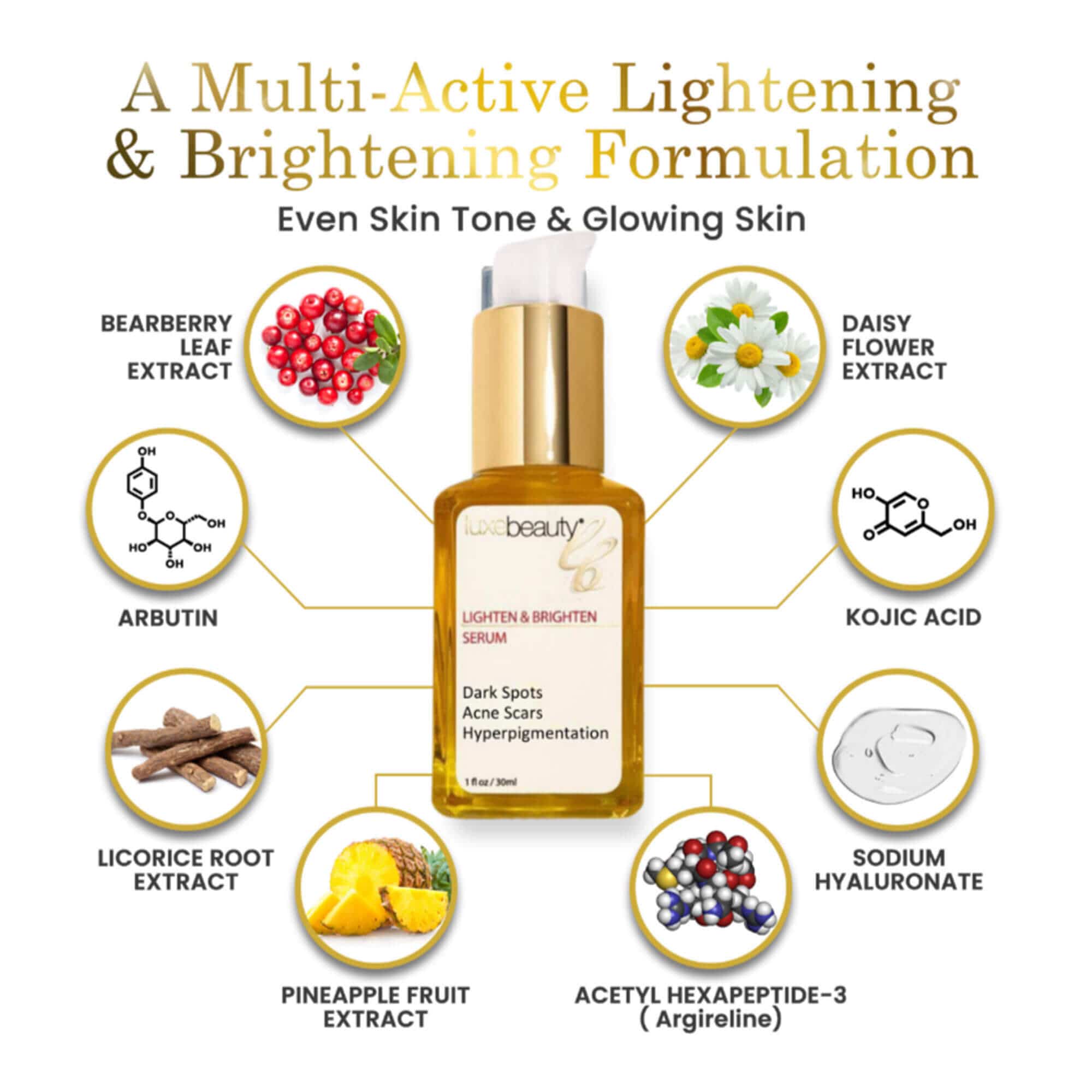
Bearberry Leaf Extract + Arbutin
Plant-derived arbutin gently reduces dark spots by inhibiting tyrosinase.*
Supports even tone without irritation.
Licorice Root Extract
Clinically shown to brighten, reduce redness, and soothe irritation.*
Contains liquiritin—a powerful pigment-lifting compound.
Daisy Flower Extract (Bellis perennis)
Shown to inhibit melanin production and brighten uneven tone.*
Pineapple (Bromelain) Extract
Gently smooths texture through enzymatic exfoliation—no acids needed.
Mulberry Root Extract
Shown to reduce age spots and prevent excess melanin production.*
Sodium Hyaluronate
Hydrates deeply and enhances plumpness without heaviness.
Acetyl Hexapeptide-3 (Argireline)
A peptide shown to reduce the appearance of fine lines and support firmness.*
HOW DOES LUXE BEAUTY'S LIGHTENING SERUM WORKS
This formula addresses pigmentation at all four biological pathways:
① Inflammation Control
Licorice + aloe calm redness and prevent pigment flare-ups.
② Melanin Regulation
Bearberry, arbutin, kojic acid, daisy, and mulberry inhibit tyrosinase → fewer dark spots.
③ Barrier Repair
Botanicals and peptides restore the skin barrier—reducing future pigmentation.
④ Oxidative Protection
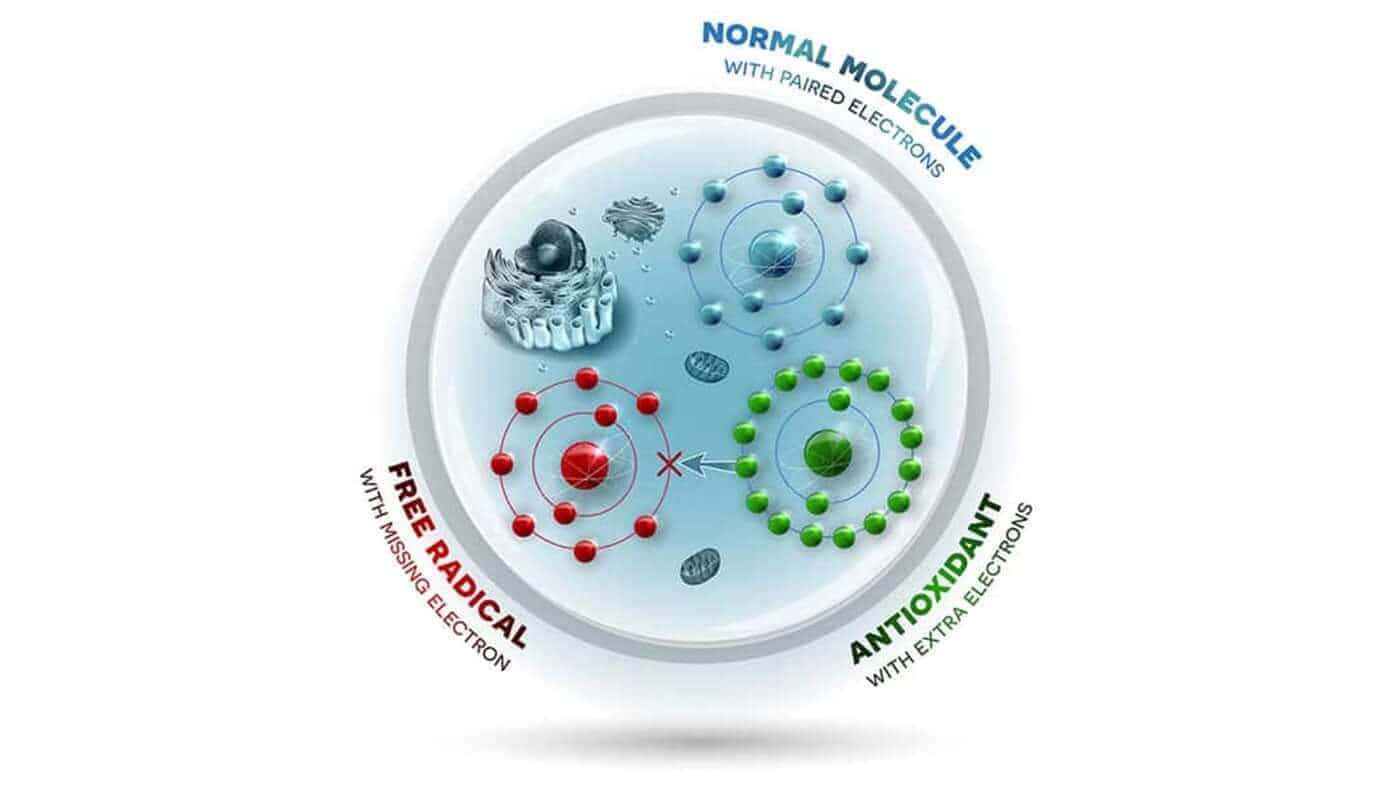
Botanical antioxidants reduce free radicals that trigger melanin overproduction.
Result:
Brighter. Clearer. More even. Barrier-strong skin.
WHO IS IT FOR?
This serum is ideal for:
✔ Dark spots
✔ Hyperpigmentation
✔ Post-acne marks
✔ Sun damage
✔ Melasma (pregnancy-safe but confirm with doctor)
✔ Redness
✔ Dull, uneven texture
Suitable for:
✓ Sensitive skin
✓ Acne-prone skin
✓ Reactive skin
✓ Mature skin
HOW TO USE THE LUXE BEAUTY SERUM
Use nightly:
Cleanse
Apply toner
Apply 1–2 pumps of Lightening & Brightening Serum
Follow with:
Internal Organic Astaxanthin supplementation (Protects your skin from the inside out and supports even skin tone)
Expect visible brightening in 7–14 days and deeper changes in 4–8 weeks.
FINAL THOUGHTS
Most skin lightening serums rely on harsh, outdated, or irritating ingredients. Luxe Beauty’s Lightening & Brightening Serum delivers a luxury, non-toxic, barrier-supportive approach rooted in advanced botanical science without compromising long-term skin health.
No bleaching agents.
No harsh acids.
No barrier damage.
No seed oils.
No dimethicone.
No fragrance.
No compromise.
This is luxury.
This is science.
It is clean beauty — without the compromise
It is gentle.
It is effective.
It is biochemist-formulated clean beauty.
And it is one of the few brightening serums designed for long-term skin health.
SCIENTIFIC REFERENCES (Peer-Reviewed)
Hydroquinone risks
1.Levitt J. The safety of hydroquinone: fact, fiction, and controversy. J Clin Aesthet Dermatol. 2007.
2. Engasser PG, Maibach HI. Cosmeceuticals and hydroquinone. Dermatol Clin. 2000.
Licorice Extract (Glabridin) for pigmentation
3. Mukherjee PK et al. Licorice extract as a skin-lightening agent. J Ethnopharmacol. 2018.
4. Yokota T et al. The inhibitory effect of glabridin on melanogenesis. Pigment Cell Res. 1998.
Bearberry (Arbutin) for brightening
5. Chakraborty AK et al. Inhibitory effect of arbutin on melanin synthesis. J Dermatol Sci. 1998.
6. Maeda K, Fukuda M. Arbutin: mechanism of its depigmenting action. Int J Dermatol. 1996.
Niacinamide for dark spots + barrier support
7. Gehring W. Nicotinamide in dermatology. J Cosmet Dermatol. 2004.
8. Draelos ZD. Nicotinamide improves skin barrier function. Cutis. 2005.
Papaya enzymes (papain) for gentle resurfacing
9. Murachi T. Papain and papain-like proteases. Mol Cell Biochem. 1994.
Vitamin C stability & irritation issues (L-ascorbic acid)
10. Pinnell SR. Cutaneous photodamage, oxidative stress, and topical antioxidant protection. J Am Acad Dermatol. 2003.
11. Nusgens B et al. Topical L-ascorbic acid penetrates the skin poorly and oxidizes rapidly.
Seed oils & oxidation
12. Choe E, Min DB. Mechanisms and factors for edible oil oxidation. Compr Rev Food Sci Food Saf. 2006.
(High linoleic acid = easily oxidized)
Silicones + dimethicone occlusion
13. Tsai TF et al. Occlusion-induced sensitivity and skin changes. Contact Dermatitis.
Astaxanthin for pigmentation & antioxidant protection
14. Tominaga K et al. Skin improvement and anti-aging effects of astaxanthin. Nutrients. 2012.
15. Camera E et al. Astaxanthin in dermatology: antioxidant and photoprotective. J Dermatol Sci. 2009.
Aloe + inflammation reduction
16. Surjushe A et al. Aloe vera: a short review. Indian J Dermatol. 2008.
17. Arbutin inhibition of melanin production — Planta Medica
18. Licorice root brightening benefits — Journal of Dermatological Science
19. Daisy flower extract melanin inhibition — International Journal of Cosmetic Science
20. Mulberry extract skin lightening — Journal of Ethnopharmacology
21. Pineapple (bromelain) enzymatic smoothing — Fitoterapia
22.Argireline peptide wrinkle reduction — International Journal of Cosmetic Science
23. Tyrosinase inhibition pathways — Antioxidants (Base
FAQs
What is the safest way to lighten dark spots naturally?
The safest method is using skin lightening serums formulated with gentle, non-toxic botanicals that regulate melanin production without damaging the skin barrier. Ingredients like bearberry extract, licorice root, daisy flower extract, niacinamide, mulberry extract, and pineapple enzymes help fade hyperpigmentation without irritation or long-term harm.
Harsh ingredients like hydroquinone, high-dose kojic acid, strong AHAs/BHAs, dimethicone, and synthetic fragrance can worsen pigmentation and should be avoided.
For an ultra-clean formula, see Luxe Beauty’s Lightening & Brightening Serum.
What ingredients should I avoid in skin lightening serums?
Dermatology and toxicology research show these ingredients may irritate skin, thin the barrier, or cause rebound pigmentation:
❌ Hydroquinone
❌ Strong AHAs/BHAs
❌ High-dose kojic acid
❌ Synthetic fragrance
❌ Unstable Vitamin C (L-ascorbic acid)
❌ Dimethicone + silicones
❌ Seed oils (sunflower, safflower, soy)
❌ Glycerin overload
❌ Harsh retinoids combined with acids
Choosing a non-toxic, barrier-friendly serum such as Luxe beauty's lightening serum helps fade dark spots safely and effectively.
Do skin lightening serums really work?
Yes — skin lightening serums are clinically shown to help fade dark spots, melasma, redness, and uneven tone when they use the right ingredients. The most effective botanicals include:
Bearberry (natural arbutin)
Licorice root
Daisy flower extract
Mulberry root
Niacinamide
Pineapple enzymes
The key is choosing a serum that brightens without stripping your barrier. Luxe Beauty’s formula is designed for long-term skin health and results.
Can skin lightening serums damage your skin?
Some of them can — especially those containing:
• Hydroquinone
• Harsh acids
• Fragrance
• Alcohol
• Silicones
• Seed oils
These can cause irritation, inflammation, barrier damage, and rebound hyperpigmentation.
Non-toxic formulas with gentle brighteners (like licorice, bearberry, mulberry, enzymes) provide the same lightening benefits without harming the skin.
Can I use skin lightening serums if I have sensitive skin?
Yes — as long as the serum is essential-oil-free, fragrance-free, alcohol-free, dimethicone-free, and seed-oil-free.
Luxe Beauty’s serum is specifically formulated for:
✔ Sensitive skin
✔ Acne-prone skin
✔ Reactive skin
✔ Barrier-compromised skin
✔ Pregnancy (always confirm with your doctor)
It brightens without irritation.
How long does it take for skin lightening serums to work?
Results vary, but dermatology literature shows:
Initial brightening: 7–14 days
Visible spot fading: 4–6 weeks
Significant improvement: 8–12 weeks
Consistency is essential — and using sunscreen in the morning prevents new pigmentation from forming.
Why is Luxe Beauty’s Lightening & Brightening Serum different?
Because it is formulated with:
✔ No hydroquinone
✔ No harsh acids
✔ No fragrance
✔ No essential oils
✔ No dimethicone or silicones
✔ No seed oils
✔ No toxic bleaching agents
Only face-grade botanicals + proven peptides + stable brightening actives, including:
• Bearberry + arbutin
• Licorice
• Daisy
• Mulberry
• Pineapple enzymes
• Hyaluronic acid
• Aloe
• Argireline peptide
It is luxury, science-backed, barrier-safe brightening — without compromise.
Is hydroquinone safe to use for skin lightening?
Hydroquinone is banned in Europe due to risks including:
⚠️ Melanocyte damage
⚠️ Exogenous ochronosis
⚠️ Rebound hyperpigmentation
⚠️ Long-term sensitivity
Most dermatologists now recommend safer botanical brighteners as first-line treatment — the exact approach Luxe Beauty uses.